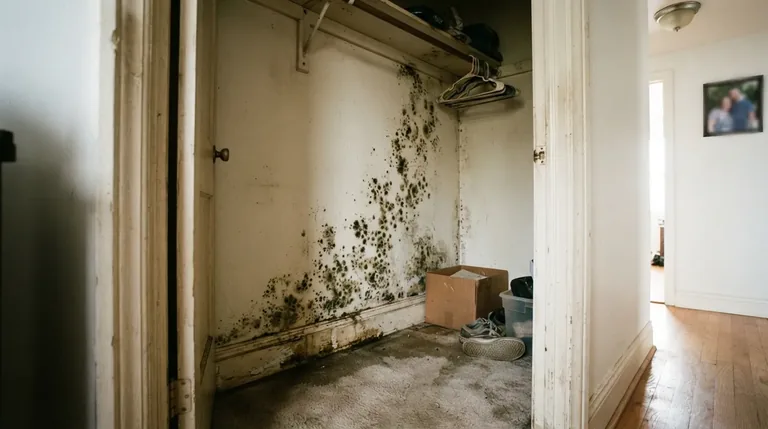
Mold After Water Damage in Katy, TX: What the Law Requires
Texas lets a homeowner remove mold from their own house without a license, but 25 square feet or more of professional work needs a TDLR-licensed contractor.
Who to Call First in KatyThe First Two Days: Why Drying Comes Before Anything Else
If your Katy home took on water from a leak, burst pipe, or flooding, here is what federal agencies say about how quickly mold can start. FEMA says wet carpeting, furniture, bedding, and any other items holding moisture can develop mold within 24 to 48 hours.
- FEMA: wet carpeting, furniture, bedding, and any other items holding moisture can develop mold within 24 to 48 hours.
- EPA: in most cases, mold will not grow if wet or damp items are dried within 24 to 48 hours.
- CDC: advises drying out flooded areas fully and quickly within 24 to 48 hours.
These figures come from FEMA's flood fact sheet, the EPA's mold guidance, and the CDC's mold guidance. Contact a Katy burst pipe cleanup guide or a restoration provider to extract standing water and start professional drying as soon as it is safe to do so. If you are not sure where your main shutoff is or whether your street sits in a mapped flood zone, check your Katy flood zone and shutoff map before the next storm.
Small Patch or Large Area: What Texas Law Requires
Texas licenses mold work under Occupations Code Chapter 1958: both assessment and remediation generally require a license. One exception: remediating less than 25 contiguous square feet needs no license, under §1958.102(c). A company you hire needs a TDLR mold remediation license once remediation covers 25 square feet or more; an owner may work on their own residential property with fewer than 10 dwelling units without a license, regardless of area, under §1958.102(e).
| Situation | What Texas Law Says | Verified |
|---|---|---|
| Mold remediation under 25 contiguous square feet | No license needed for that remediation (§1958.102(c)); mold assessment still needs a license under §1958.101 | Checked: September 2026 |
| Homeowner working on their own house, fewer than 10 dwelling units | Owner or the owner's own employee does not need a license on residential property with fewer than 10 dwelling units, with no area limit (§1958.102(e)) | Checked: September 2026 |
| Hiring an outside company for remediation of 25 sq ft or more | That company needs a TDLR mold remediation license | Checked: September 2026 |
| Same firm offers both inspection and cleanup on one project | Not allowed, assessor and remediator must be different license holders (§1958.155(a)) | Checked: September 2026 |
| After licensed remediation work is finished | Certificate of mold remediation due to the owner by the 10th day after completion (§1958.154(a)) | Checked: September 2026 |
Where the Owner Exemption Applies
The owner exemption in §1958.102(e) lets you, or your own employee, do mold assessment or remediation on residential property you own, with no area limit, as long as it has fewer than 10 dwelling units — a typical Katy single-family house qualifies. Hire an outside contractor instead, and once the remediation reaches 25 square feet, that contractor needs a TDLR mold remediation license to do the work legally.
Read the exact wording in Texas Occupations Code Chapter 1958, or check the TDLR mold FAQ for current guidance, and see the broader Katy water damage overview for what to do before mold even becomes a question.
The Two-Company Rule: Why One Firm Can't Do Both Jobs
Texas law does not allow the same license holder to both assess and remediate mold on one project. Under Occupations Code §1958.155(a), a license holder may not perform both mold assessment and mold remediation on the same job, so if one company inspects, a different company has to do the removal.
- Ask upfront whether the company doing your mold inspection also plans to do the cleanup — for the same project, that is not allowed.
- Get the assessment (testing and scope of work) from one license holder, then get the remediation (removal and cleanup) from a separate one.
Paperwork to Keep — and What It Means If You Sell
Once licensed mold remediation work is finished, Texas law requires the contractor to give the property owner a certificate of mold remediation. That certificate is due not later than the 10th day after the work is completed, under Occupations Code §1958.154(a).
If You're Buying a Home That Flooded Before
Under §1958.154(b), a seller must give buyers copies of any certificates of mold remediation completed in the five years before the sale. Ask for these documents whenever you buy an older Katy house — they document that licensed remediation was completed on the property.
Keep your certificate of mold remediation with your other home records. If you sell within five years of the work, Texas law requires you to give copies to the buyer under §1958.154(b).
Katy homes that took water during the Tax Day Flood in April 2016 or Hurricane Harvey in August 2017 are old enough now that any mold certificates from that work would already fall outside the five-year disclosure window, but that does not mean the moisture problem is gone. If you are buying an older home in an area that has flooded before, ask directly whether it flooded in 2016 or 2017, whether any mold work was done, and whether paperwork survived, and consider your own inspection either way.
Insurance and Mold After a Covered Water Loss
Mold is usually excluded from a standard Texas homeowners policy, except for the repair work needed because of a water loss the policy already covers. Coverage for that ensuing mold damage varies under TDI's consumer guide on water damage and mold — some policies cap it at a percentage of your dwelling coverage, and others do not include it at all.
- A sudden and accidental water release, like a burst pipe, is commonly covered, subject to your policy's terms and deductible.
- Flood, ongoing leaks, and seepage are typically excluded, and so is mold that is not tied to a covered loss.
- Sublimits on the mold repair that IS covered vary by insurer — 25%, 50%, or 100% of your dwelling coverage limit all appear in the endorsements TDI has published, so check your own declarations page.
This page is general information, not legal or insurance advice. Ask your insurer how your specific policy treats mold before assuming it is or is not covered.
If you rent your Katy home, tell your landlord about the leak or flood in writing right away — repairing the building is the landlord's responsibility. Your own renters policy covers your belongings, not the structure itself, and general steps for Katy homeowners after water damage still apply to what you do inside your unit.
If That Did Not Work
Mold work does not always go as planned, and the right next step depends on how big the problem turned out to be. Here is what to do if a small cleanup did not hold, if you are unsure whether you need a licensed contractor, or if you disagree with how an insurance claim was handled.
- Try again: If the affected area is genuinely under 25 contiguous square feet, Texas law lets you handle that remediation yourself, but mold that returns warrants another assessment, not just the same cleanup again.
- Try another route: For 25 square feet or more, or if you are unsure how to measure the affected area, treat it as a licensing matter. Confirm that any provider you consider can show a TDLR mold remediation license for whichever role, assessment or remediation, they are performing, and see what to do right after a burst pipe in Katy if the mold traces back to a plumbing failure.
- Who to contact: For a complaint about a mold licensee, TDLR handles enforcement. For a dispute about what your homeowners policy covers, call the Texas Department of Insurance consumer help line at 800-252-3439, 8 a.m. to 5 p.m. Central, Monday through Friday.
What Changed on This Page
- September 2026: page published; phone numbers and legal deadlines checked against the official sources linked above.
Frequently Asked Questions
Do I need a license to clean up a small mold patch in my Katy home?
Can the same company both inspect and remove mold in my house?
What paperwork should I get when mold work is finished?
Does my homeowners insurance cover mold?
How fast can mold start after my house gets wet?
I'm buying an older Katy home. How do I know if it had mold work done after a past flood?
Water in your home right now?
See who to call first in Katy, how to reach your water provider, and how to check your flood zone.
Who to Call First in Katy